
Mercy Women Leaders: Student Spotlight on Shy'anne Kush
Earlier this year, Mercy University was ranked No. 1 in New York and No. 11 nationwide on Newsweek's inaugural "America's Best Colleges for Women 2026" list. Developed in partnership with Gender Fair, this national ranking recognizes institutions that demonstrate measurable progress in advancing women through leadership representation, equitable policies and pay practices, campus safety, and career opportunity.
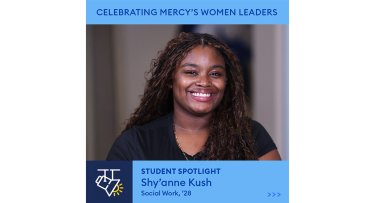
Student leader Shy’anne Kush, Social Work, ’28, shows what that ranking looks like every day.
She serves as president of the Black Student Union and vice president of the Student Government Association, and she works as a resident advisor. Those roles are building the communication and problem-solving skills she’ll carry into her senior field practicum and her career in social work.
Learn more about her journey at Mercy and the women in faculty, staff and leadership roles who mentor her and show that she belongs in these roles, too.
Q & A with Shy’anne Kush
What drew you to Mercy University, and why did you choose Mercy over other schools?
What initially drew me to Mercy University was its affordability and the opportunity to receive a quality education without having to take on a significant amount of student loan debt. I wanted to make a financially responsible decision. I also have several family members who attended Mercy for their undergraduate and graduate degrees, so I was already familiar with the university and the opportunities it offers. Having a family member who currently works at Mercy was another benefit because I knew I would have a strong support system and access to resources that could help me succeed.
How is Mercy preparing you for your career, and what opportunities have been most valuable to your professional development?
Mercy is preparing me for my future career in social work by providing opportunities to gain both academic knowledge and real-world experience. One of the most valuable parts of the social work program is the field practicum experience during senior year, which will allow me to apply what I've learned in the classroom, work directly in the field and build professional connections. Mercy also has a great Career Center that helps students prepare for life after graduation through career guidance, résumé development and other professional resources. Additionally, my involvement in campus leadership positions like being a resident advisor has helped me develop communication, leadership, problem-solving and interpersonal skills that will be important in my future career as a social worker.
Can you share a moment when you felt truly supported as a woman student at Mercy?
One of the ways I've felt supported as a woman at Mercy is through the different events and programs that celebrate women's achievements, leadership and empowerment. As a residential advisor and someone involved in various student organizations, I've had opportunities to both attend and help organize events that bring women together and create spaces for meaningful conversations.
What does it mean to you that Mercy has been ranked #1 for women in New York in Newsweek's America's Best Colleges for Women list?
Knowing that Mercy has been ranked #1 for women in New York is something I find incredibly rewarding and inspiring. As a woman attending Mercy, it reinforces that I made the right decision in choosing a university that values women's education, leadership and success. College is about more than earning a degree; it's about preparing yourself for the future and building the confidence to pursue your goals. Mercy provides women with opportunities to get involved, take on leadership roles, build connections and prepare for their careers. To me, this recognition reflects the supportive environment that I've experienced firsthand and shows that Mercy is committed to helping women succeed both during college and after graduation.
How would you describe the campus environment in terms of safety and inclusivity for women?
I would describe Mercy's campus environment as safe, welcoming and inclusive. As a student, I appreciate knowing that there are safety measures in place, such as emergency blue-light around campus and campus safety officers who patrol the university 24 hours a day. There is also a strong security presence in and around the residential buildings, which helps me feel comfortable living on campus. In terms of inclusivity, Mercy is an incredibly diverse university where students come from many different backgrounds, cultures and experiences. One thing I really appreciate is that there are so many opportunities to find your community and connect with people who share your interests and values. As a woman of color, I feel that representation and inclusivity are especially important, and Mercy provides an environment where students can feel welcomed, respected and supported.
What opportunities specifically for women—whether academic, leadership, or extracurricular—have you taken advantage of at Mercy?
One of the opportunities I've really appreciated at Mercy is attending events like Women of Mercy: Inclusivity and Leadership, featuring women panelists, including Mercy alumnae, staff and faculty, who share their professional experiences, career journeys and advice for current students. It's inspiring to hear from women who were once in our position and have gone on to accomplish their goals. I've also had opportunities to develop my own leadership skills through my involvement in student organizations and my role as a residential advisor and a club executive member. These experiences have allowed me to take initiative, organize events, advocate for students and build relationships with others on campus. Being surrounded by strong women in leadership positions has encouraged me to become more confident in my own abilities and continue challenging myself.
Can you describe a time when a faculty or staff member went above and beyond to help you succeed?
One experience that really stands out to me was when I was struggling to understand how to use my academic accommodations through Accessibility Services. At first, I wasn't completely sure how the process worked or how to make sure I could continue using my accommodations in my classes. A staff member took the time to walk me through the process, answer my questions and make sure I understood how to advocate for myself moving forward. That support meant a lot to me because academic accommodations aren't something that students don't always feel comfortable discussing. Having someone who was patient, understanding and willing to help made me feel supported and reassured me that I had the resources I needed to succeed academically. It also taught me the importance of speaking up for myself and utilizing the support available to me.
What makes Mercy's environment particularly supportive for women students?
What makes Mercy particularly supportive for women is the strong presence of women in faculty, staff and leadership positions who serve as mentors and role models for students. There are so many women on campus who are willing to offer guidance, share their experiences, and help students navigate challenges. As a woman of color, representation is especially meaningful to me. Seeing other women of color in professional and leadership roles reminds me that there is a place for me in those spaces as well. I also appreciate that the women I've interacted with at Mercy treat me with respect, recognize my potential and encourage me to use my voice. It's empowering to be in an environment where women uplift one another rather than make each other feel limited in what they can accomplish.
How has Mercy helped you grow not just academically, but also personally and professionally?
Mercy has helped me grow in so many ways beyond the classroom. Academically, I've gained knowledge and skills that are preparing me for my future career in social work. Personally, being part of such a diverse university has challenged me to step outside my comfort zone, meet people from different backgrounds and become more open-minded. College is a completely different environment from what many of us are used to, and it teaches you a lot about yourself. I've learned how important it is to surround yourself with like-minded individuals while also being open to different perspectives and experiences. Professionally, my involvement in student leadership and campus activities has helped me become more confident, responsible and comfortable communicating with others. I feel like I'm on the right path toward the future I envision for myself, and I know that the people and opportunities I've encountered at Mercy have played a major role in helping me get there.
What advice would you give to prospective women students considering Mercy?
My biggest piece of advice would be to never be afraid to ask for help and to take advantage of every opportunity available to you. Also, there are so many women in leadership positions that can help you see yourself in that space. There's a saying that I really believe in: "A closed mouth doesn't get fed." If you don't speak up, ask questions or advocate for yourself, you could miss out on opportunities and resources that could make a difference in your college experience. College can be challenging, and sometimes students struggle in silence because they don't know where to turn or feel uncomfortable asking for assistance. But at Mercy, there are so many people and resources available to help you succeed. Whether it's a professor, an advisor, a staff member, or another student, don't be afraid to reach out. I would also encourage women to get involved on campus, take on leadership opportunities and build relationships. Your college experience is what you make of it, and Mercy gives you the opportunity to create an experience that will help you grow into the woman and professional you want to become.
Complete this sentence: "Being a woman student at Mercy means..."
Being a woman student at Mercy means being heard, understood, respected and supported. It means being part of a community where women uplift one another, celebrate each other's accomplishments, and encourage each other to reach their full potential. As a woman of color, it also means having the opportunity to see women who look like me succeed in leadership and professional spaces, reminding me that I can accomplish those same goals. Most importantly, it means knowing that my voice matters, my goals are achievable and I have a community of women behind me who genuinely want to see me succeed.