
Mercy Alumnus Combines Public Service with Groundbreaking Research on Policing and Racial Justice
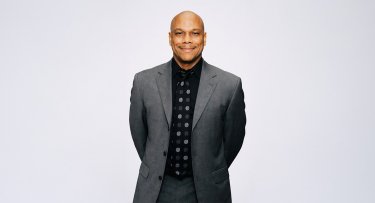
Shawn D. Walton, Ph.D., M.S., M.A., M.A. Ed, a proud alumnus of Mercy University, has built a distinguished career bridging scholarship with public service. An AmeriCorps alumnus who answered President Barack Obama's call to service, Dr. Walton earned the 2023 President's Lifetime Achievement Award for a decade of civic engagement, a commitment that runs parallel to his groundbreaking doctoral research analyzing the evolution and resurgence of stop-and-frisk practices in New York City.
Dr. Walton recently earned his Ph.D. in Transformative Social Change from Saybrook University in May 2025. His dissertation, “From Reform to Resurgence: A Case Study of the NYPD's Stop-and-Frisk Policy Under Changing Mayoral Administrations (1994–2024),” examines how enforcement strategies shift across political administrations and how those shifts disproportionately impact Black/African American, Afro-Caribbean, Afro-Hispanic/Latino, and LGBTQ+ communities. Drawing on policy analysis, historical records, legal decisions, and publicly available data, his research offers urgent insights into contemporary debates about immigration enforcement, surveillance, and racialized policing.
His civic leadership and scholarly contributions have earned him widespread recognition: a citation from the New York State Assembly (2024); certificates of recognition from the New York State Senate (2024) and New York City Mayor Eric L. Adams (2023); and, in February 2026 for the 100th anniversary of Black History Month, recognition from Black Doctorates Matter (BDM), a movement dedicated to celebrating and supporting historically marginalized scholars in doctoral education.
A Foundation Built at Mercy
For Dr. Walton, the path to doctoral scholarship began in the classrooms of Mercy University, where he first learned to question power structures and center lived experience in his analysis.
"My foundation for analyzing race, governance, and public policy was laid at Mercy University," Dr. Walton reflected. "An essential figure in that early formation was Dr. Oscar Odom, III. In his constitutional law and criminal justice courses, he saw potential in me before I fully recognized it myself."
Dr. Odom, who was an adjunct professor of criminal justice at Mercy at the time, became the first mentor to encourage him toward graduate study and would later serve on Dr. Walton's doctoral dissertation committee. "He was the first mentor to push me toward graduate study, with law school as the initial horizon," Dr. Walton said. "That encouragement turned curiosity into disciplined study and, eventually, a sustained commitment to legal studies and political science."
Beyond academics, Mercy University instilled in Dr. Walton a critical framework that would define his scholarly approach for years to come.
"Mercy University trained me to question power instead of taking it at face value," he explained. "Dr. Odom challenged me to look past the surface of authority and ask harder questions: Who benefits from a policy? Whose interests are protected? Who absorbs the cost? That way of thinking became the backbone of my later work, because it forces analysis to stay anchored in the lived experiences of the people most affected by public decisions."
This analytical lens proved essential as Dr. Walton pursued graduate studies, first earning his Master of Arts in Political Science at the Graduate Center for Worker Education at Brooklyn College, CUNY, where his master's thesis documented stop-and-frisk practices from 1998 to 2008.
The influence of Dr. Odom's mentorship is evident throughout Dr. Walton's scholarship. In his doctoral literature review, he cites Dr. Odom's own doctoral action research on NYPD stop-question-and-frisk, a full-circle moment that demonstrates the lasting impact of the student-mentor relationship that began at Mercy.
"His mentorship did not stop at Mercy," Dr. Walton said.
Research That Speaks to the Present Moment
Dr. Walton's scholarship carries particular urgency in today's national climate of intensified immigration enforcement and expanded surveillance. He argues that the discretionary logic underlying NYPD stop-and-frisk practices has become a blueprint for broader forms of racialized social control.
"The constitutional and political logic that normalized discretionary street stops in New York City is no longer confined to New York City policing," Dr. Walton noted. "The Supreme Court's 1968 Terry doctrine, originally framed as a narrow officer-safety exception, has been stretched into a broad permission structure for state-citizen encounters."
His research documents how this model has expanded to federal enforcement agencies, including Immigration and Customs Enforcement (ICE) and Customs and Border Protection (CBP), where militarized tactics and biometric surveillance are increasingly routine.
"I am trying to help national conversations move past slogans and into accountability: what these tactics do, who they target, and how quickly they spread once political incentives align," Dr. Walton said. "I do that as a scholar-practitioner, in community with others committed to strengthening doctoral pathways and keeping research connected to lived reality."