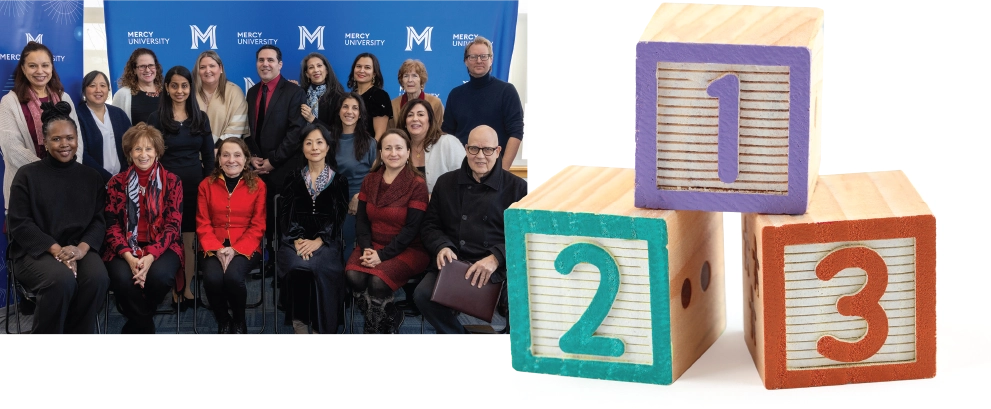


From classroom...to career.
Building the Next Generation of Educators
“We are in the midst of a labor crisis in teacher education,” says Eric Martone, dean of Mercy University’s School of Education. “Fewer students are entering the field, fewer are completing their programs and new teachers are burning out at unprecedented rates. Recruiting and retaining educators is especially challenging.” At the same time, the path to becoming a teacher has become increasingly difficult. Many aspiring educators must balance coursework with outside jobs, often without access to meaningful, hands-on classroom experience. That gap between preparation and practice is exactly what Mercy University is working to close.
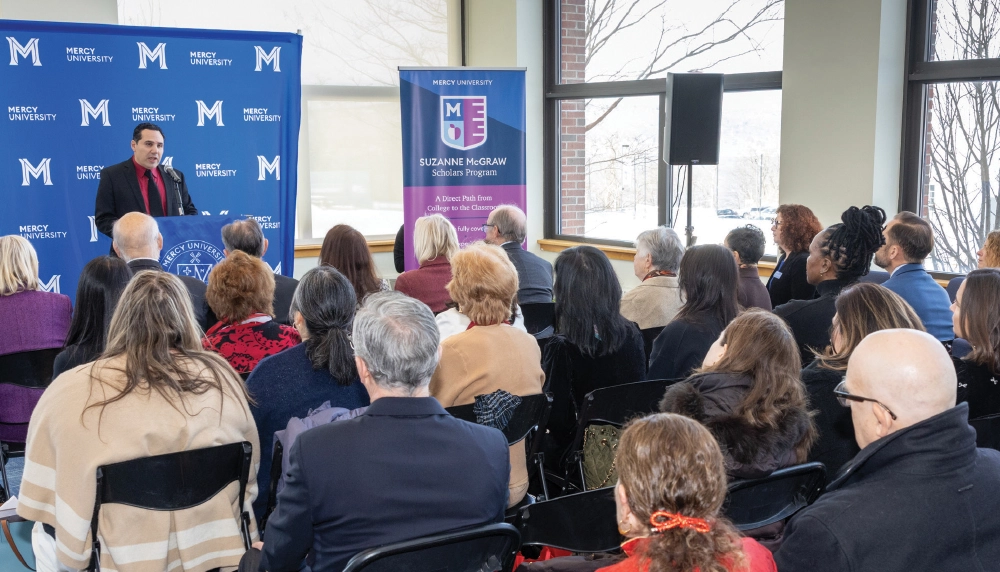
At Mercy, the focus is not only on educating future teachers, but on building a sustainable pipeline of prepared, supported educators who are ready to serve their communities from day one.
The Suzanne McGraw Scholars Program, launched this year, is a central part of that effort. Funded by a $9.3 million gift from the Suzanne McGraw Foundation, the largest philanthropic investment in Mercy’s history, the program is designed to remove both financial and experiential barriers to entering the profession.
Each year, 25 students will receive full funding for their tuition and be placed in paid early childhood–level classrooms while completing their degree. By the time they graduate, they will have both a Bachelor of Science in Teaching Students with Disabilities (Pre-K–Grade 12) and real-world experience.
“This extraordinary generosity represents an investment in our mission and a powerful validation of the impactful work being done here at Mercy,” said Provost Dr. Kristin Curry Greenwood.
Scholars also have the opportunity to continue into an accelerated Master of Science in Early Childhood Education at no tuition cost, creating a seamless pathway from undergraduate study through advanced certification.
Importantly, the McGraw Scholars Program is not a standalone solution. It builds on a broader ecosystem of teacher preparation at Mercy, including the Empire State Teacher Residency Program, a New York State–funded grant program that allows aspiring teachers to complete classroom residencies in priority districts while earning a stipend and hands-on experience.
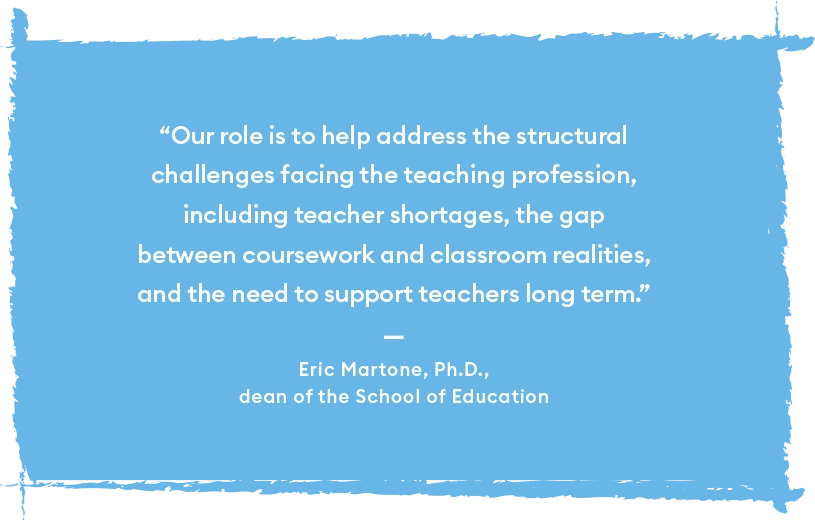
“Programs like the Empire State Teacher Residency succeed because they are built collaboratively,” Martone said. “Our role is to help address the structural challenges facing the teaching profession, including teacher shortages, the gap between coursework and classroom realities, and the need to support teachers long term.”
Together, these programs share a common approach: integrating learning with real classroom experience from the start. “One of the longstanding critiques of teacher preparation is that coursework and practice often occur in isolation,” Martone said. “This model addresses that directly.”
President Susan L. Parish emphasized that the impact extends far beyond the University. “Our region desperately needs qualified, passionate and committed childhood educators,” Parish said. “We also know that many talented young people who want to become teachers face real barriers, from financial pressures to limited access to experience. This program removes those barriers.”
Unlike traditional models, McGraw Scholars are embedded in classrooms as paid professionals while earning their degree. After graduation, they continue in their roles for an additional year, providing stability for both the graduates and the schools they serve. In an uncertain job market, that level of built-in opportunity is rare.
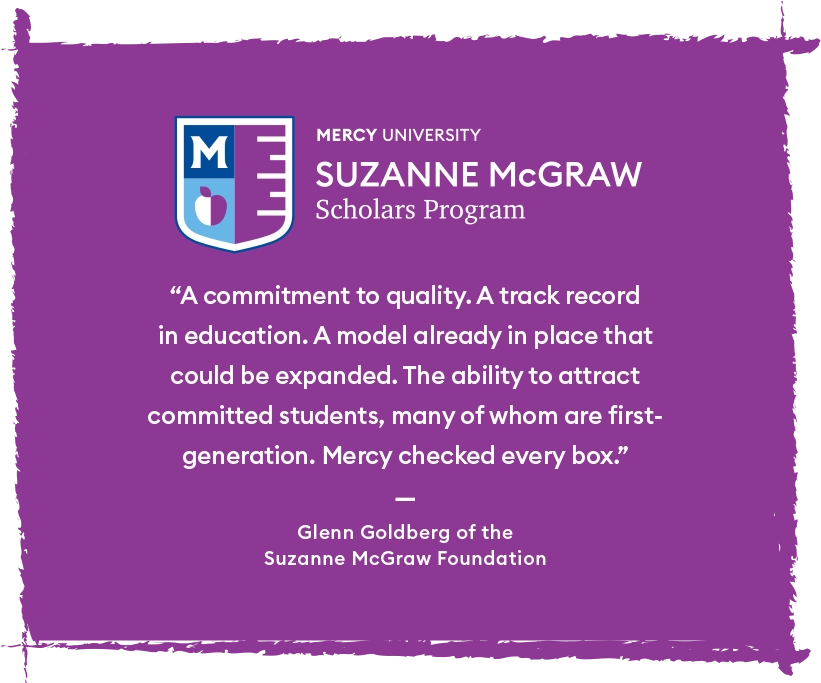
Glenn Goldberg of the Suzanne McGraw Foundation said Mercy stood out as the right partner to bring this vision to life. “A commitment to quality. A track record in education. A model already in place that could be expanded. The ability to attract committed students, many of whom are first-generation,” Goldberg said. “Mercy checked every box.”
Over the next five years, the program is expected to produce 125 new early childhood–level educators, each entering the workforce with experience, support and a clear path forward. For Mercy, the Suzanne McGraw Scholars Program represents more than a scholarship. It reflects a broader commitment to rethinking how teachers are prepared, supported and retained.
“This program is about more than degrees,” Parish said. “It is about creating opportunity, strengthening communities and preparing the next generation of educators to lead.”
As Mercy celebrates its 75th anniversary, that commitment continues to take shape in new and meaningful ways, ensuring that the future of education is not only imagined, but built.