
Mav Market Food and Resource Pantry
Welcome to the Mav Market: Mercy’s Basic Needs Pantry
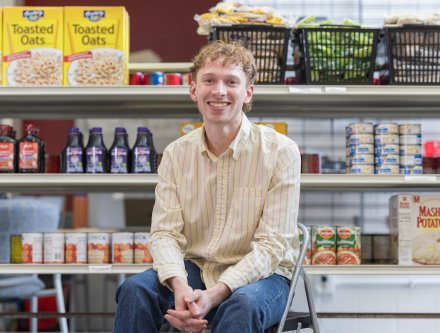
The Mav Market is a judgment-free and inclusive resource for members of the Mercy University community experiencing food insecurity or struggling to meet their basic needs. We provide access to nutritious food and personal care items at no cost, so that by easing the burden of securing basic needs, the Mav Market empowers students to stay focused on their studies and reach their full potential as Mavericks. Students should go to class hungry for knowledge, not for food. If you can’t afford balanced meals or sacrifice food to pay bills, know that you don’t have to choose.
Location and Hours of Operation
Students can utilize the Mav Market once a week. Student's may not use the pantry more than once a week, including visits to other campus locations.
If you are not available during the below hours, email mavmarket@mercy.edu.
The Mav Market will run on a reduced schedule while we train our new student staff. Thank you for your patience as we enter a new semester!
Address: 555 Broadway, Dobbs Ferry, NY 10522
Public transportation: Take the Metro-North Hudson Line to Dobbs Ferry Station. From there, the campus is a short uphill walk. The Westchester County Bee-Line Route 66 bus also serves this campus.
Monday: 10 am - 5 pm
Tuesday: 2 pm - 5 pm
Wednesday: 10 am - 5 pm
Thursday: 10 am - 11:30 am and 3 pm - 5 pm
Friday: 12 - 1:30 pm
Address: 1200 Waters Place, Bronx, NY 10461
Public transportation: Take the 6 train to Westchester Square–East Tremont Ave. From there, take the Bx21 bus or take the Hutchinson Metro Center shuttle service.
Monday: 10 am - 1 pm
Tuesday: 10 am - 2 pm
Wednesday: 3 pm - 5 pm
Thursday: CLOSED
Friday: 1 pm - 3 pm
Address: 47 West 34th Street, New York, NY 10001
Public transportation: Take the B, D, F, M, N, Q, R, or W trains to 34th St–Herald Square, or the 1, 2, 3, A, C, or E trains to 34th St–Penn Station. Both stations are a short walk from campus.
Monday: 10 am - 1 pm
Tuesday: 12 pm - 3 pm
Wednesday: 10 am - 1 pm
Thursday: 12 pm - 3 pm
Friday: CLOSED
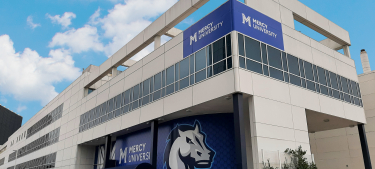

Student Basic Needs Resource Guide
An evolving page of basic needs resources curated by our Basic Needs Manager. Find information and resources on: food, housing, technology, health care, and more.
Support the Mav Market
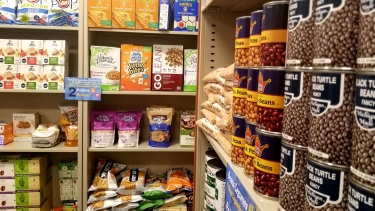
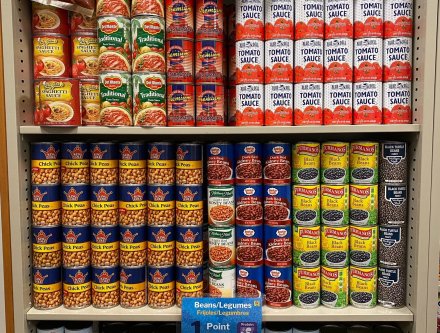
The Mav Market relies on donations from individuals and community partners, we thank all of our donors for their continued generosity and support of our mission with the Mav Market!
- Feeding Westchester
- Food Bank for New York City
- The Rivertowns Rotary Club
- Aldersgate United Methodist Church
- Stop and Shop
- Swipe Out Hunger
- Wegmans
What is food insecurity?
The U.S. Department of Agriculture defines food insecurity as a “household-level economic and social condition of limited or uncertain access to adequate food"
Food insecurity is the inability to access enough food for you to live an active, healthy, and productive life. Not only does it mean not having access to sufficient food overall, it can also mean:
- not having access to sufficient healthy food options
- not having access to culturally relevant food
- having only inconsistent or otherwise difficult to access food
In 2024, 13.7% of U.S. households experienced food insecurity; in higher education, 59% of surveyed students experienced food and/or housing basic needs insecurity; this is the highest share of food insecurity since the COVID pandemic
Effects of food insecurity
Physical health - People who experience food insecurity are more likely to experience malnutrition and chronic conditions like heart disease and diabetes.
Mental health - Food insecurity can also hurt people's mental health and result in depression, anxiety, and stress
Well-being - Not meeting basic needs like food and shelter can lead to social isolation, stigma, and shame
School and work - Without enough food, people who experience food insecurity may have difficulty concentrating, have low energy, or miss school and work due to illness
Information courtesy of Feeding America
Student basic needs insecurity
Our 2025-2026 impact report:
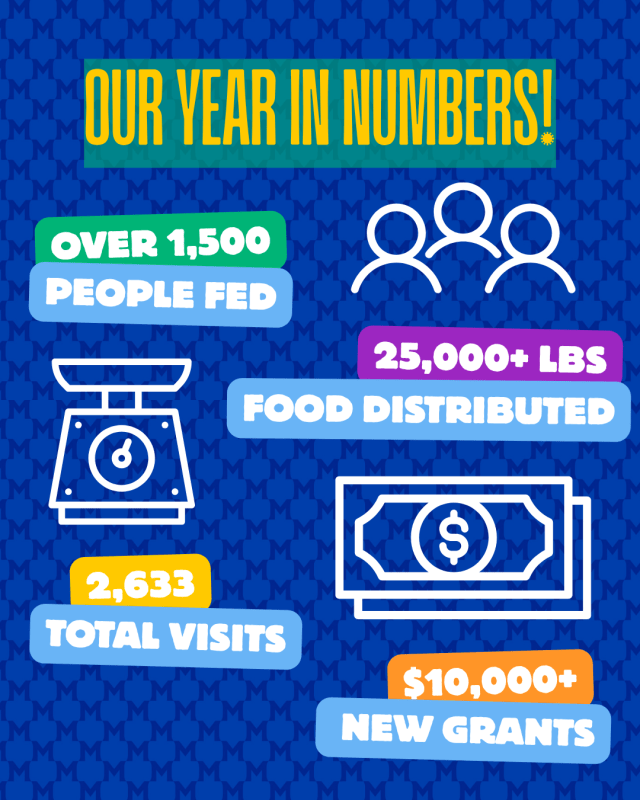
3 in 5 college students experience basic needs insecurity related to food
The Hope Center for Student Basic Needs, 2025
Below are some questions you can ask yourself to help better understand if you are experiencing food insecurity.
In the past 12 months:
- I worried whether my food would run out before I got money to buy more.
- The food that I bought just didn't last, and I didn't have money to get more.
- I couldn't afford to eat balanced meals.
- I cut the size of my meals or skipped meals because there wasn't enough money for food.
- I ate less than I felt I should because there wasn’t enough money for food.
- I was hungry but didn’t eat, because there wasn’t enough money for food.
Questions used by U.S. Department of Agriculture (USDA) to assess food insecurity.
Student Basic Needs for Faculty and Staff
Thank you for you interest in supporting Mercy students to meet their basic needs. Here are some ways that you can help students!
Quick Links:
Student basic needs refers to the essential resources that students need to learn, grow, and persist in higher education. They are the minimum resources necessary to holistically support all students in their daily lives, to ensure strong academic performance, and promote persistence towards graduation and supporting student wellbeing. They include:
❏ Reliable access to nutritious food
❏ Safe, stable, and affordable housing
❏ Financial stability
❏ Transportation
❏ Mental and physical health care
❏ Technology and internet access
❏ Access to public benefits and emergency support
An ecosystem that supports financial stability by ensuring equitable access to nutritious and sufficient food; safe, secure and adequate housing (to sleep, study, cook and shower); healthcare to promote sustained mental and physical well-being; affordable transportation; resources for personal hygiene care; and emergency needs for students with dependents
While faculty and staff should avoid making assumptions about a student, if you witness the following indicators, an appropriate response from a faculty and staff member can be to express concern, offer support, or connect them with resources.
- Frequent absences or lateness
- Falling asleep in class
- Difficulty concentrating
- Sudden decline in performance
- Missing assignments despite prior engagement
- Requests for extensions due to work, caregiving, transportation, or housing issues
- Not having required materials, textbooks, technology, or internet
- Mentioning food, rent, transportation, medical, or family financial stress
- Appearing distressed, exhausted, or withdrawn
- Using campus spaces for long hours because they lack a safe place to go
Issues of food and housing insecurity and/or homelessness often carries a significant amount of stigma. If someone reveals that they are dealing with these challenges, there are several ways you can provide support. You can:
- Point out Mercy's on-campus food and resource pantry, the Mav Market
- You can directly refer them to the Basic Needs Manager, or
- Complete a CARE referral on the student's behalf
When talking with students about basic needs, it important to use supportive language. It can be the difference between reinforcing stigma and opening the door to support. For example:
- Using asset-based language: Say “students seeking support” or “students navigating basic needs challenges.” Avoid “needy” or “poor” or “hungry”
- Avoid making assumptions: You cannot tell who needs help by face-value.Students with jobs,families, or who seem confident may still need support.
- Protect privacy: Do not tell people about a student's situation who do not have a legitimate need to know, joke, ask for proof, or promise what you cannot guarantee. Connect them respectfully to resources that can help.
Steps for a Successful Referral:
- Validate - "Thank you for telling me about your situation, I'm sorry you are dealing with this and that it's stressing you out"
- Normalize - "You know, a lot of students actually have concerns similar to yours"
- Connect - "Have you heard about our Basic Needs Manager? They might be able to help you find the support that you need."
- Follow-through - "Were you able to get the information or resources you need?"
You can connect students to the Basic Needs Manager either by emailing mavmarket@mercy.edu or submit a CARE Referral.
Include a statement in your syllabus on basic needs, for example: “Any student who has difficulty affording groceries or accessing sufficient food to eat every day, or who lacks a safe and stable place to live, and believes this may affect their performance in the course, is urged to contact the Basic Needs Manager (mavmarket@mercy.edu) for support. You may also notify me, if you feel comfortable doing so, and I will do my best to help you identify and arrange other resources. We can also discuss other ways I can support you. To find more resources, visit the Student Basic Needs Resource Guide for additional support services and guidance’’
For more on the importance of syllabus statements, consider the following from Sara Goldrick-Rab: Beyond the Food Pantry: Spreading the Word - Supporting Students' Basic Needs with a Syllabus Statement and Welcome Survey
Other ways to support student basic needs:
- Consider using open educational resources or low-cost materials when appropriate
- Place course textbooks on library reserve
- Avoid expensive access codes for digital materials
- Allow student to make up work after personal crises
Be mindful of student's work-schedules, caregiving responsibilities, and transportation limitations
Frequently Asked Questions
The Mav Market is Mercy University's food and resource pantry, open to all students, staff, and faculty. We provide food, snacks, and toiletries, as well as additional resources such as federal benefit eligibility pre-screeners, SNAP assistance, and nutrition education. Our services are completely free, confidential, and open to all!
Find us in Westchester in Main Hall Room 115, the Bronx in Room 1250, and Manhattan in Room 329!
Basic Needs Manager Office: Main Hall 121
If this is your first time, here’s what the process looks like:
- Figure out which campus you want to shop at and find out when they have open hours
- Bring a reusable bag!
- Check in with the student worker staffing the pantry
- See how many points you have to shop (dependent on household size)
- Take what will help you get through the week!
If you're feeling nervous visiting for the first time--know that it's completely normal. Please know:
- Many Mercy students, faculty, and staff use the Mav Market regularly
- Using the Mav Market does not mean you have failed
- Having your basic needs met is an essential part of academic success and something that every person is worthy of
You deserve to eat. You deserve support. We are here to help.
The Mav Market offers a variety of free items, including:
Food
- Shelf-stable goods and snacks (pasta, rice, sauce, mac and cheese, ramen)
- Canned goods (vegetables, fruits, beans, meat)
- Breakfast items (cereal, oatmeal, peanut butter, jelly)
- Grab-and-go options (protein/snack bars, nuts, chips, crackers)
- Fresh produce
- Frozen meat/protein
Personal Care & Hygiene Items
- Toothbrushes and toothpaste
- Soap
- Deodorant
- Razors
- Menstrual products
Availability may vary, but we do our best to stock items students need most.
If you have a dietary restriction, reach out to the Basic Needs Manager (mavmarket@mercy.edu) and we will work to make sure you can be accommodated.
If you are in need of food assistance outside of open hours, please email us at mavmarket@mercy.edu.
Q: Can I volunteer with the Mav Market?
A: Unfortunately, at this time we are not able to host volunteers. Our Mav Markets are staffed by Federal-Work Study students, if you are interested in working with the Mav Market and are eligible for Work-Study, reach out to mavmarket@mercy.edu. If you are looking to fulfill community service hours or you are an organization looking to partner with us, please reach out mavmarket@mercy.edu.
Q: Can I design a project for the Mav Market for academic credit?
A: Absolutely, the Mav Market encourages students to participate in a way that is meaningful for the! We will gladly work with you and your professor to design a project that enriches your perspective and helps the Mav Market.
Q. Can I host a food drive to benefit the Mav Market?
A. Yes! We love to work with on and off-campus organizations looking to raise items/funds to benefit the Mav Market. Please contact mavmarket@mercy.edu before your drive to coordinate with our Basic Needs Manager.
Join us to fight food insecurity on campus and make a gift to the Mav Market.
Donate online using our Amazon Wishlist! Items will be shipped directly to the Mav Market in Dobbs Ferry.
You can also donate items in-person at any of our locations. Please email us at mavmarket@mercy.edu to arrange a drop-off time!
We are in need of:
- Individually-wrapped snacks
- Toiletries
- Microwaveable single meals, shelf stable
- Spices: salt, pepper, garlic, onion, paprika
- Energy/protein bars
- Ramen noodles
- Mac n' cheese
Eating in NYC! Tips, tricks, and more
A guide to enjoying all of what NYC food culture has to offer. Whether you're an international student here for the first time, or a commuter student who wants to explore outside their borough -- check it all out below! P.S. Don't forget to bring your Mercy ID and ask for a student discount!
Ordering:
- Many places expect quick ordering
- Step aside if you need time to look at the menu or decide
- Customization is common, don't be afraid to ask for substitutions
- Tap-to-pay is widely accepted across the city (make sure they take your bank!)
- If you're unsure of what to get, try asking what they recommend!
Payment and tipping:
- Tipping is mandatory for most sit-down restaurants! A good tip to leave is about 20% of the bill for your waiter. The same applies to food delivery. A typical tip at a bar is $1-$2 a drink.
- Gratuity: A fee/payment automatically charged to the bill, especially for large groups. Gratuity is usually around 18%
- Most everywhere takes credit/debit cards and other cashless payments, but make sure to carry some cash for street carts, farmers markets, and some small eateries.
- Make reservations! Popular restaurants often fill up fast; book a table ahead, if you can.
- Remember, American portions are large! Share plates with friends or expect to take leftovers home!
Popular Grocery Stores:
- Trader Joes - Affordable basics, frozen meals, snacks
- Whole Foods - Higher quality but often more expensive
- Target - Snack, pantry staples, and household items
- H Mart - Korean and broader Asian groceries
- Local bodegas - Convenient snacks, drinks, basic items
Farmers Markets:
- NYC Farmers Markets Map 2026: https://www.nyc.gov/assets/doh/downloads/pdf/cdp/farmers-markets-map.pdf
GrowNYC Greenmarket and Gardens: https://grownyc.org/locations/
Manhattan:
- Little Dominican Republic (A-train to 175th St)
- Little Senegal (2,3,B,C-train to 116th St)
- Korea in Manhattan (B,D,F,M,N,Q,R,W-trains to 34th St)
- Little Ukraine (F-train to 2nd Ave and 6-train to Astor Pl)
- Chinatown in Manhattan (J,M,Z,N,Q,R,W,6 trains to Canal St)
Bronx:
- Little Africa in the Bronx (B,D trains to 167th St)
- Little Albania (B,D trains to Fordham Rd)
- Little Guyana in the Bronx (2,5 trains to Nereid Ave/6 train to St Lawrence Ave)
- Little Yemen (2,5 train to Bronx Park East/Pelham Pkwy)
Queens:
- Chinatown in Flushing (7 train Flushing-Main St)
- Koreatown in Queens (7 train Flushing-Main St)
- Little Bangladesh (F train to 169th St/E,J,Z Jamaica Center)
- Little Bhod-Tibet (M,R trains to Northern Blvd)
- Little Colombia (E,F,M,R Jackson Heights/7 train to 74th-St Broadway)
- Little Ecuador (7 train to Junction Blvd/74th-St Broadway)
- Little Egypt (R train to Steinway St or N/W to Astoria Blvd)
- Little Guyana in Queens (A train to Ozone Park-Lefferts Blvd)
- Little India (E,M,F,R trains to Jackson Heights or 7 train to 74th-St Broadway)
- Little Manila (E,M,F,R trains to Jackson Heights or 7 train to 74th-St Broadway)
Brooklyn:
- Chinatown in Sunset Park (N train to 8th Ave)
- Little Mexico in Sunset Park (D,N,R,W trains to 25th St/36th St)
- Guyana Gateway (3,4 trains to Crown Heights-Utica Ave)
- Little Caribbean (B,Q,S trains to Prospect Park or 2,5 train to Church Ave)
- Little Haiti (2,5 train to Newkirk Ave)
- Little Odessa (B,Q train to Brighton Beach)
- Little Palestine (R train to Bay Ridge/86th St)
- Little Pakistan (B,Q train to Newkirk Plaza)
Little Poland (G train to Greenpoint Ave/Nassau Ave)
From black and white cookies to dollar slice of pizza, NYC is known for some one-of-a-kind foods! Use the Mav Market NYC Eats Bingo Board and challenge your friends to see who can eat their way to bingo! Find it here
Contact Us
Matthew Pangburn, M.S.
Basic Needs Manager
Office Hours:
Monday - Friday, 9 a.m. - 5 p.m.
Main Hall 121; Available on Zoom and at all campuses by appointment
Follow us on Instagram for updates!